Small business financial planning

Know what the business can support next.

Bring recorded cash, customer payments, payroll, recurring bills, taxes, and other commitments into one practical review. Use that context to decide what can happen now, what needs a plan, and what should wait without turning RunwayCal into an accounting replacement.

Start
Recorded cash and customer payments
Pressure
Payroll, bills, tax, and commitments
Next
Hire, spend, open, or wait
Conceptual owner decision context
RecordedCash + customer payments
Already carriedPayroll + bills + tax + commitments
Next reviewHire, spend, open, or wait?

Planning context, not a literal formula or an automatic recommendation.

Answer the next owner question with the numbers already in the business.

The owner does not need another abstract dashboard. They need to see what came in, what is due, what changed, and how the next hire, purchase, or location would affect the plan.

01What cash and customer money are recorded?
Start with held cash and realized receipts. Keep unpaid customer amounts and expected sales visible as separate context rather than treating them as money already available.
02What is already spoken for?
Review payroll, recurring bills, tax obligations, and other recorded commitments with their timing. The bank balance alone does not show every upcoming demand on cash.
03What can happen now, and what should wait?
Put the next hire, purchase, or location into a plan or scenario. RunwayCal shows the financial consequence; the owner makes the call.

Move from recorded history to the next practical choice.

01

Start with what actually happened.

Financial statements and recorded transactions explain the period behind you. They remain the starting point for planning, not something the planning workflow replaces.

02

Separate received money from expected money.

A customer promise, open invoice, or planned sale may matter to the business. It is not current cash until the receipt is recorded.

03

Keep bills, payroll, and tax dates in view.

The same total can create different pressure depending on when payments are due. Record known obligations and review their timing before adding another commitment.

04

Put the next move into a separate plan.

A hire, new location, or major purchase belongs in a planned or hypothetical path until the business acts. That keeps the current position honest.

Review the current picture, the recorded history, and known obligations.

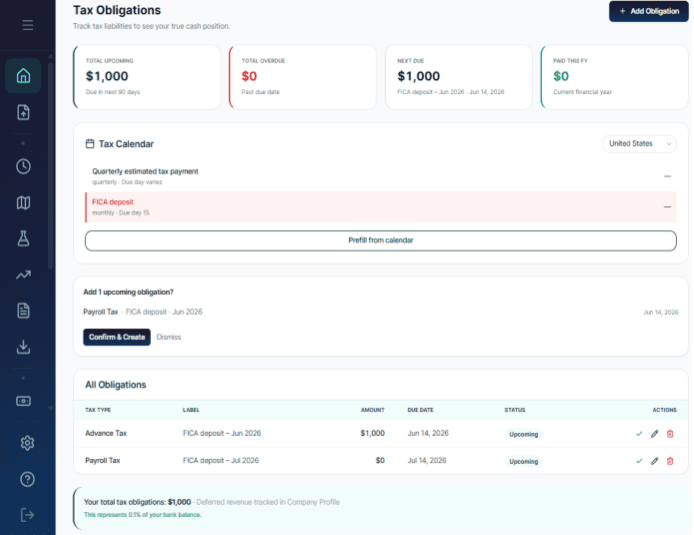
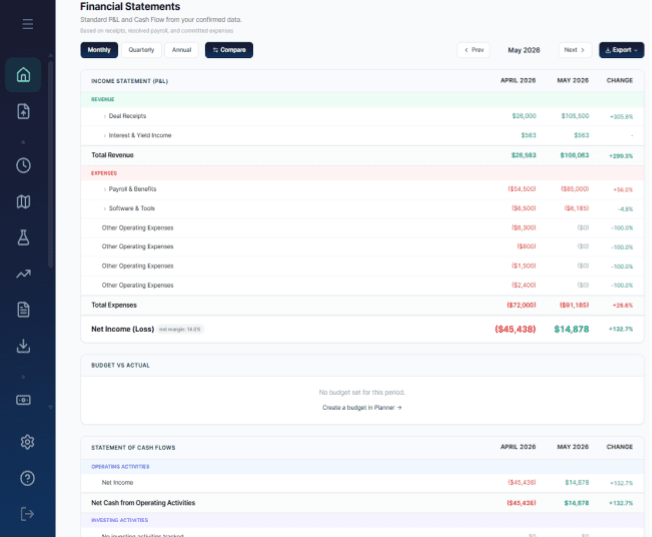
The screenshots below are current product evidence. Each answers a different part of the owner decision and none guarantees that a particular choice is safe.
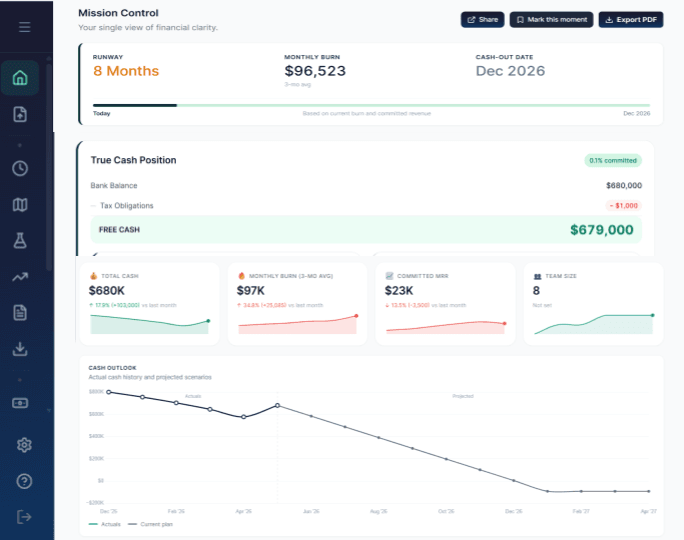
RunwayCal Mission Control showing cash, runway, burn, and current operating measures
Current operating pictureMission Control brings supported cash, burn, runway, and operating context into one review.
RunwayCal profit and loss statement showing recorded income and expense lines
Recorded historyThe supported financial statement keeps recorded period performance visible.
RunwayCal tax obligation schedule showing recorded amounts, dates, and payment status
Known tax timingRecorded obligations stay visible with their due dates and status.

Related numbers can still answer different questions.

Bookkeeping
The recorded history supplied by the business and its finance process.
Received cash
Money recorded as landed, separate from an open invoice or expected sale.
Commitment
A known cost or obligation that can affect the forward plan before payment.
Scenario
A separate way to test a possible hire, purchase, or location.
Decision
A human choice supported by the numbers, never made automatically by the product.

Owner-led planning

See what the business carries before adding the next thing.

Bring cash, customer payments, payroll, bills, tax, and the next choice into one review without losing the difference between facts and plans.