
Collections Planning
Know what is due. Know what arrived. Plan around the difference.
Keep expected customer cash, due dates, partial receipts, and overdue amounts in view without treating any of them as money received. Then see what a timing change means for the cash decisions ahead.
Illustrative amounts show states, not customer data or product UI.
Chapter 01
Start with customer cash you expect, not cash you already have.
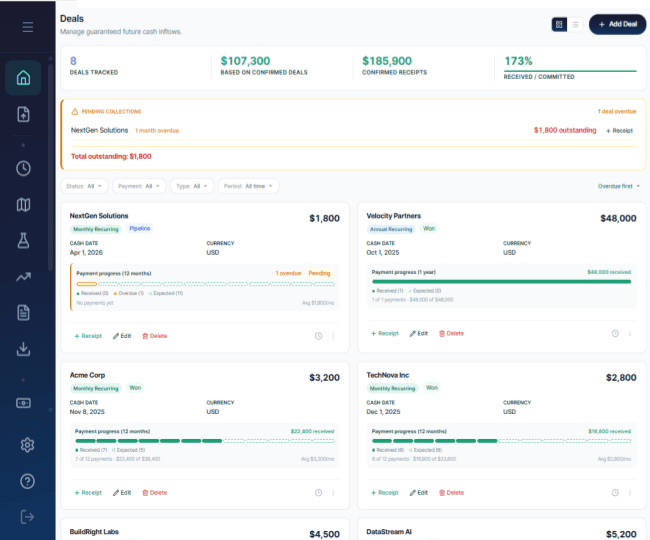
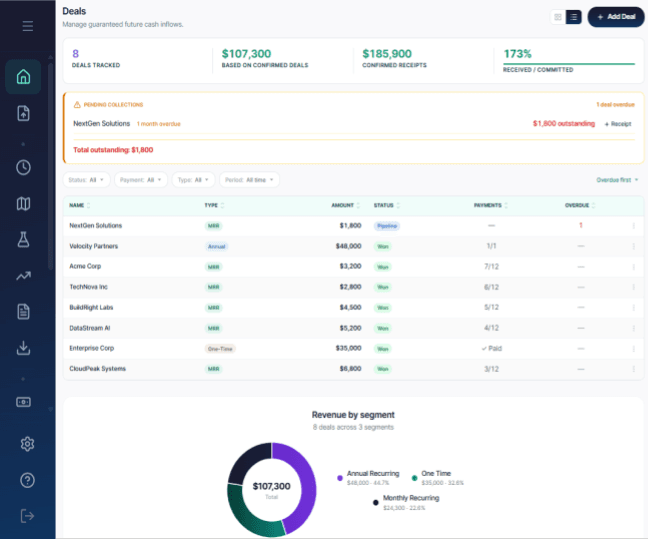
A won deal can carry an expected amount and cash date. A payment schedule can make several due moments visible. Both are useful planning context, but neither is a receipt.
RunwayCal keeps the expectation attached to the deal while receipt records preserve what actually landed. That boundary helps a team discuss commercial progress without quietly increasing realized cash.
Chapter 02
A partial payment should stay partial.
Multiple receipts can be recorded against a deal. Receipt totals remain separate from the expected deal amount, so the remaining gap stays visible instead of the whole amount being treated as collected.
Pending and overdue states help organize the review. They do not send an invoice, chase a customer, or replace an accounts receivable ledger. The next follow-up remains a human decision.
Chapter 03
Keep the receipt trail explainable.
Receipt records retain the amount, landing date, and source context. Manual entries and records from supported providers can sit in the same append-oriented history, while duplicate controls help prevent the same external receipt from being counted twice.
An actual receipt can be associated with the nearest open expected date. That is a timing match, not an amount-aware accounting reconciliation. If a receipt is mistaken or premature, rejection keeps the original record and can create a compensating cash movement instead of silently erasing the history.
Chapter 04
See how long customer cash takes to arrive.
Collection speed measures the days from a deal's won or expected cash context to its first landed receipt. It can show which customers tend to pay sooner, which take longer, and where an overdue amount deserves review.
This is an operating collection-speed signal, not an accounting DSO calculation. It supplies timing evidence for the plan without predicting when every future payment will arrive.
Estimate your collection speedRelative timing only. No customer score or payment prediction.
Chapter 05
Carry the delay into the cash conversation.
A late receipt does not change the contract value, but it can change when cash is available beside payroll, tools, taxes, and other commitments. The collections view identifies the timing gap. Cash Flow shows that gap inside the wider position.
Only recorded receipts belong in realized cash. Planned revenue and scenario outcomes remain separate, even when they help explain what the team expected to happen.
Connect collections to Cash FlowChapter 06
Use the signal. Keep the follow-up human.
Review the deal, the expected dates, recorded receipts, and the outstanding gap. Then decide whether the customer needs a conversation, the cash plan needs a timing change, or a scenario deserves testing.
RunwayCal keeps the evidence and financial consequence connected. It does not decide how to contact a customer, collect a payment, recognize revenue, or run an accounting close.
Expected. Due. Partial. Overdue. Received.
Plan around the cash that arrived, and keep the rest visible.
Bring collection timing into the financial plan without turning an expectation into realized cash.