Tax obligation tracking

Track what the business owes before the cash leaves.

Record an adviser-supplied tax amount, its due date, jurisdiction context, and payment status. Keep that known obligation visible beside cash and runway planning without asking RunwayCal to calculate tax, file a return, verify a deadline, or replace professional advice.

Amount
Supplied by the finance or tax process
Timing
Recorded due date
Status
Open, overdue, or paid
Conceptual tax obligation review
01ObligationAdviser-supplied amount
02Due dateRecorded timing
03Cash reviewHuman decision

Planning sequence only. RunwayCal does not calculate tax, file returns, or guarantee deadlines.

Keep a known obligation in the cash decision before payment day.

A bank balance can look available even when part of it is already spoken for. Recording the amount, date, and status keeps the obligation in view while responsibility for the tax calculation and deadline stays with the business and its advisers.

01What has the business recorded as owing?
Enter the obligation type and the amount supplied by the accountant, adviser, or internal finance process. RunwayCal does not decide which taxes apply.
02When is the payment expected to leave cash?
Record the due date confirmed by the business's tax process. The date supports planning but is not a filing guarantee or a complete jurisdiction calendar.
03What changed after payment?
Mark the item paid when the business settles it. Open, overdue, and paid states organize the review; they do not file or verify the payment with a tax authority.

Move from a recorded obligation to a reviewed cash consequence.

01

Record the amount from the responsible source.

The business or its adviser supplies the tax amount. RunwayCal keeps the entry visible; it does not calculate liability or provide tax advice.

02

Keep the due date beside the obligation.

Timing matters because a known payment can create pressure before it leaves the account. Use the confirmed date rather than a generic estimate.

03

Bring the obligation into the cash review.

Recorded tax context can inform the product-derived True Cash Position and forward planning view. It does not become a universal formula for safe spending.

04

Update the status after the business acts.

Open, overdue, and paid states help the team see what still needs attention. Filing, remittance, and compliance remain outside this workflow.

See the recorded schedule and its place in the wider cash context.

These current RunwayCal screenshots show the tax obligation record and the related Mission Control context. The captured schedule is a United States example, not a universal tax calendar.
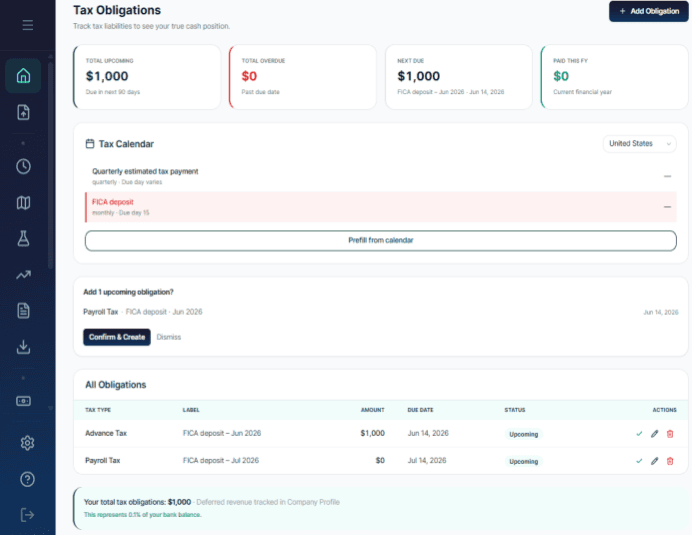

RunwayCal tax obligation schedule showing United States example obligations, dates, and payment status
Tax obligation scheduleA current United States example with recorded amounts, due dates, and open, overdue, or paid status.
RunwayCal Mission Control showing bank balance, recorded tax obligations, and True Cash Position
Mission Control contextRecorded tax obligations remain visible beside held cash in the product-derived cash context.

Related numbers can still answer different questions.

Amount
A figure supplied by the business's accountant, adviser, or finance process.
Due date
A recorded planning date, not a deadline calculated or guaranteed by RunwayCal.
Status
An internal open, overdue, or paid state updated through the business workflow.
Cash context
A view of the known obligation beside other supported financial inputs.
Professional responsibility
Tax calculation, filing, payment verification, and advice remain outside RunwayCal.

Tax planning context

Keep the obligation visible before the cash is due.

Record the amount, due date, and status supplied by the responsible finance process, then review the cash consequence without turning planning software into tax advice.