
Professional Services
Advisory · Specialist work · Retainers · Milestones
See how client work, team costs and collections affect cash.
Client work does not always become cash when the work happens. Put retainers, milestones, billing, payroll, contractor costs, and collection timing into one financial picture before making the next commitment.
Professional-services financial reality
The work can be delivered before the cash arrives.
Pipeline, signed work, delivery, billing, and collection do not move as one event. Keep them separate while payroll, contractors, tools, and recurring commitments continue.
Client work to cash
More work only helps if the economics and timing move with it.
delivery and collection stay distinct
- 01
Pipeline
Possible work stays separate from committed revenue
- 02
Contracted work
Signed work enters the delivery plan
- 03
Delivery capacity
The team sets what can be delivered
- 04
Work / milestone
Delivery progress can unlock billing
- 05
Billing
The collection clock begins
- 06
Collection
Expected payment still has timing risk
- 07
Cash
Received money reaches the financial position
Commitments keep moving
- Payroll
- Contractors
- Tools
- Recurring commitments
Engagement structures
Different work creates different billing and collection questions.
Retainers, milestones, and projects create their own cash rhythms. The financial plan should show those rhythms without pretending to manage delivery operations.
Retainer
01Recurring agreement
What recurs, what does delivery require, and when is it collected?
Milestone
02Delivery gate
What must happen before billing, and how long until cash arrives?
Project
03Defined scope
How do delivery cost and collection timing line up?
Capacity decision
Can the current team deliver the work already sold?
Put available capacity, committed work, people cost, and expected collection timing beside the decision to hire or add a contractor.
Available capacity
What can the current team carry?
Committed work
What delivery is already promised?
Collection timing
When is customer cash expected?
Capacity decision
Can the current team deliver the work already sold?
- Use current team
- Add a contractor
- Hire before the next contract
Variance and scenarios
Is new work improving the financial position?
See what moved between the plan and the recorded result. Then test a hiring, contractor, delivery, billing, or collection-timing change without rewriting the current numbers.
- Plan
Approved assumptions
- Actual
Recorded period
- Variance
Difference retained
- Next action
Review and decide
Client work
- Plan
- Approved delivery assumption
- Actual
- Recorded period result
- Variance
- Difference retained
- Next action
- Review slipped work or milestone timing
- Status
- Needs review
People cost
- Plan
- Approved payroll and contractor plan
- Actual
- Recorded period cost
- Variance
- Difference retained
- Next action
- Review capacity and contractor use
- Status
- Needs review
Collections
- Plan
- Expected collection timing
- Actual
- Recorded cash received
- Variance
- Difference retained
- Next action
- Review invoice and collection timing
- Status
- Needs review
Test the timing before making it fixed.
- 01What happens if we hire before the next contract closes?
- 02What happens if a major collection moves by 30 days?
- 03What changes if contractor cost rises?
- 04Can the firm carry a larger milestone project?
Illustrative questions, not scenario presets or autonomous advice.
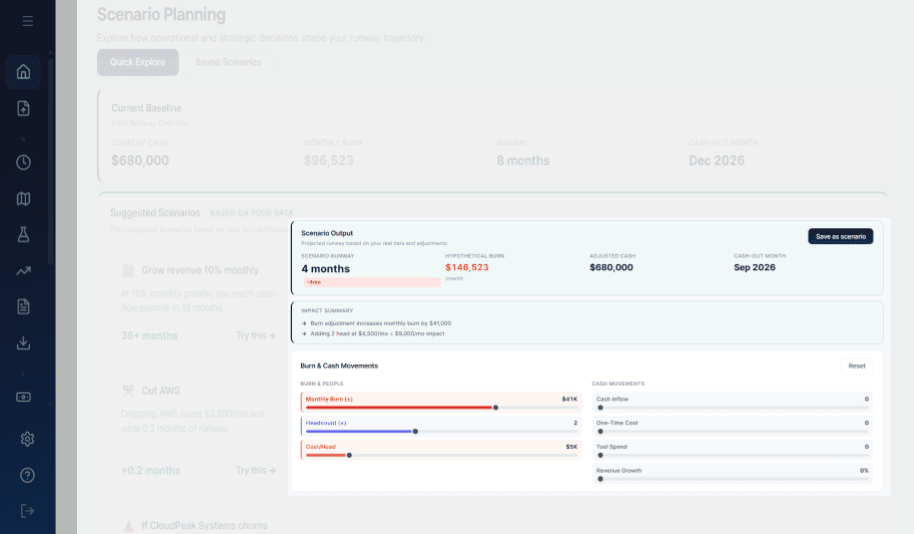
Inside RunwayCal · Scenarios
Compare changed assumptions with the baseline while the current financial reality remains separate.
Product evidence
Keep the client-work question inside the complete financial picture.
Mission Control, Planner, Scenarios, and read-only reporting support the financial decision. They do not replace a PSA, timesheet, or resource scheduler.
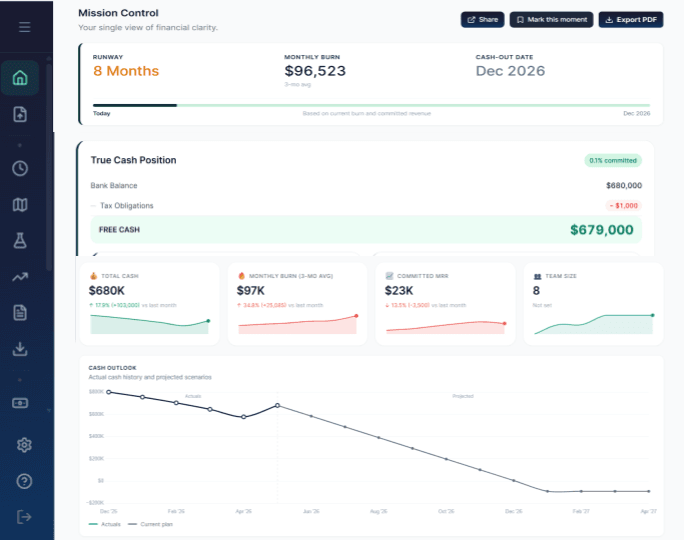
Inside RunwayCal · Mission Control
Start with the current financial position.
Runway, burn, cash-out timing, True Cash Position, and financial context stay together before the firm changes the plan.
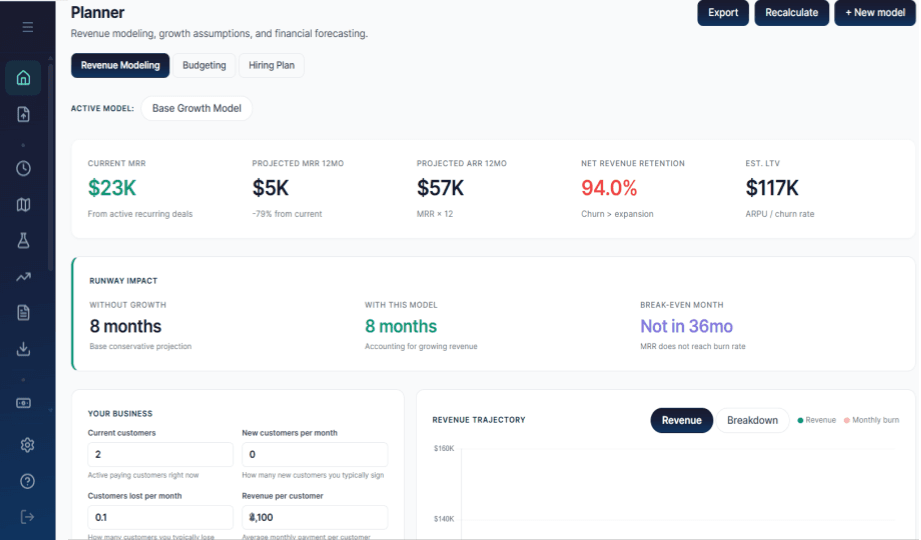
Inside RunwayCal · Planner
Keep delivery assumptions connected to the plan.
Use the planning surface to review revenue and cost assumptions. It does not schedule projects, people, or time entries.
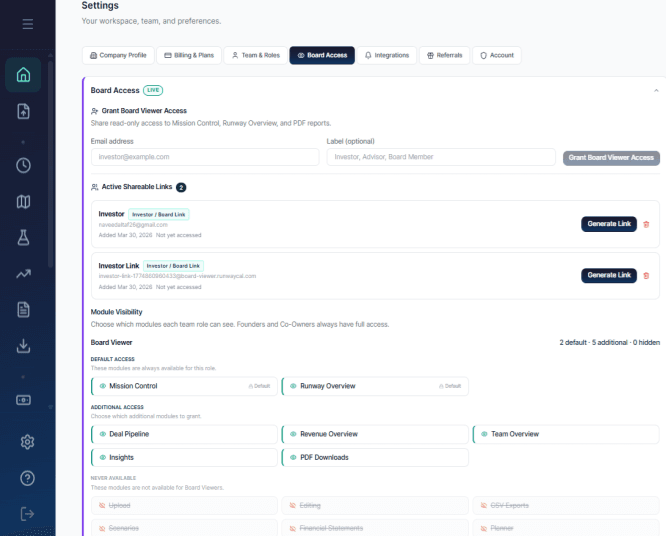
Inside RunwayCal · Board Access
Share a selected read-only view.
Read-only access and module visibility controls support a focused leadership or client conversation.
Decision questions
Keep work, capacity, collections, and cash distinct.
Use each measure to ask what changed, what is already committed, and what the next contract asks of cash.
- Pipeline
- Decision question: Which possible work should stay outside the committed plan?
- Planning context
- Contracted work
- Decision question: What delivery is already promised?
- Planning context
- Delivery capacity
- Decision question: Can the current team carry the work already sold?
- User-reviewed
- Expected collections
- Decision question: When is billed money expected to arrive?
- Expected, not received
- Cash received
- Decision question: What customer money has actually been recorded?
- Recorded result
- Runway
- Decision question: How does the current cash and cost position carry the firm?
- Visible in product
Keep planning
Take the client-work question into the right planning view.
Move from delivery capacity and collection timing into the financial decision the firm needs to test.
Know what the next contract asks of cash.
Connect client work, team costs, billing milestones, collections, and commitments before the next decision becomes fixed.