
FP&A (Financial Planning & Analysis)
FP&A stands for Financial Planning and Analysis. It is the work of planning the months ahead, comparing the plan with what actually happened, and helping the business understand what may need to change.
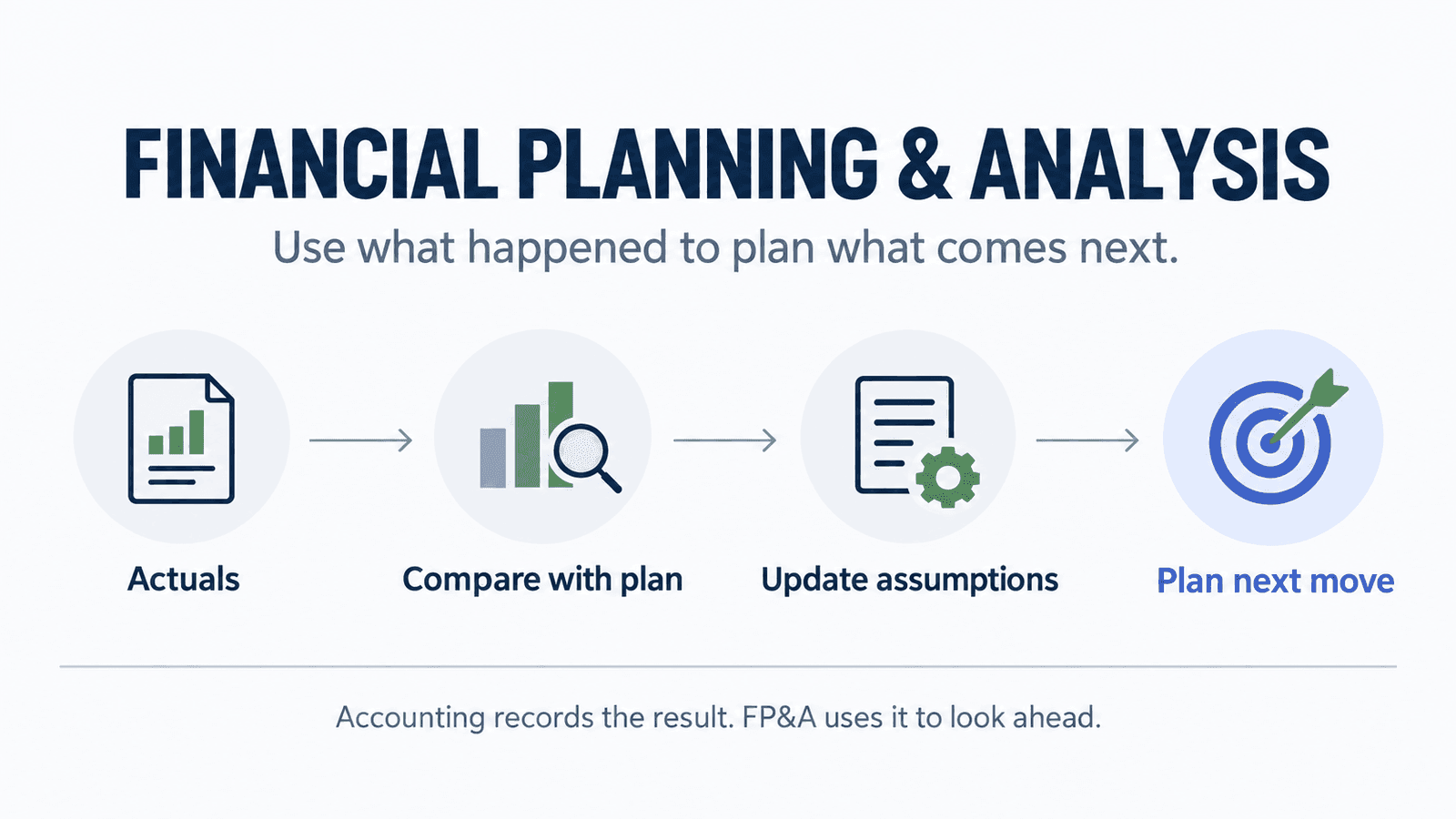
Accounting records the result. FP&A uses it to help the business look ahead.
What is FP&A (Financial Planning & Analysis)?
FP&A is the part of finance that helps a business look forward, not only record what already happened.
It usually includes budgets, forecasts, scenario planning, variance analysis and financial reporting.
In a larger company, a dedicated FP&A team may do this work. In a smaller business, the same job may be handled by a founder, finance manager, fractional CFO or accountant.
The purpose is simple: understand where the business stands, what the current plan says about the months ahead, and how a decision could change that picture.
FP&A is not the same as accounting
Accounting records and reports what has happened in the business.
FP&A uses that financial information, together with plans and assumptions, to help the business think about what comes next.
The two work together, but they have different jobs.
Why it matters
A business can have accurate accounts and still be unsure what it can afford next.
FP&A helps connect today's numbers with questions such as whether to hire, increase spending, change a budget, prepare for a cash shortfall or test a different revenue plan.
Example
A business planned to spend $40,000 this month but actually spent $48,000. Revenue also arrived later than expected.
Accounting records what happened. FP&A asks what those changes mean for the months ahead and whether the budget, hiring plan or cash assumptions should be reviewed.
How RunwayCal helps
RunwayCal connects the financial information used in planning, including cash, commitments, revenue, teams, budgets, scenarios and actual results.
That gives founders and finance teams one place to review the business, compare plans with what happened and test a change before committing to it.
RunwayCal supports financial planning and analysis. It does not replace the accounting ledger or the professional judgment behind a financial decision.
Common mistakes
- 1Thinking FP&A is only for large companies.
- 2Treating a forecast as a promise.
- 3Confusing planning with accounting.
Get the Financial Clarity Newsletter
Practical tips on cash flow, runway, and financial decisions for founders, business owners, CFOs, investors, and board members. Free, weekly, no spam.
Related terms
Plan the business with the numbers in front of you.
Compare what happened with the plan, then test what the next decision could change.
Explore Planner