
For Co-Founders
Make the next decision from the same numbers.
You can own different parts of the business and still begin the decision from one current financial position. RunwayCal keeps recorded reality, the working plan, and possible scenarios distinct so both founders can see what changed and discuss what happens next.
Can the business carry the role now?
What happens if the receipt lands late?
Hire
Can we hire now?Spend
Can we increase spend?Cash
What cash actually arrived?Timing
What if a customer pays late?Assumption
Which assumption changed?Status
Is this hypothetical or already committed?01 / One starting point
Begin with the business as it stands now.
Before debating a hire or a new commitment, look at the same recorded financial picture. Mission Control brings current cash, burn, runway, revenue, and operating context into the review without turning a plan or scenario into a fact.
Explore Mission Control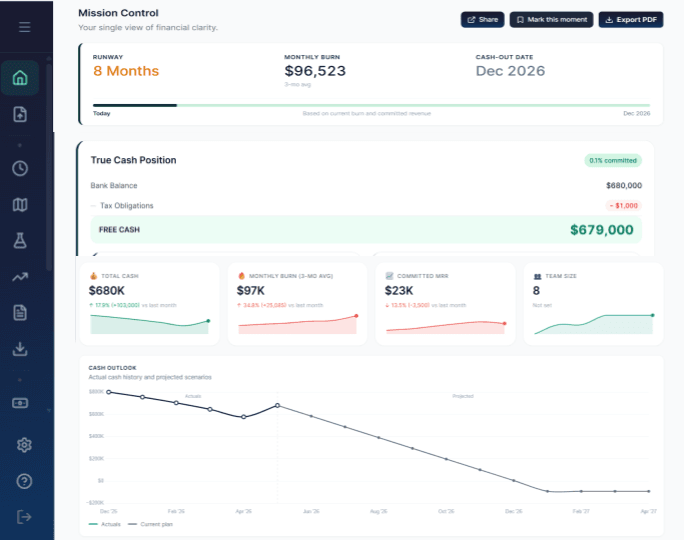
02 / Facts and assumptions
Keep what happened separate from what you are debating.
A late receipt, a proposed hire, and an approved supplier payment do not have the same status. Label the difference before discussing the move.
03 / Test before committing
Change the assumption, not the actuals.
Test a hiring date, spending choice, collection delay, or revenue assumption in a scenario. The result is hypothetical. It gives the founders a consequence to discuss, not an answer chosen by RunwayCal.
Explore Scenarios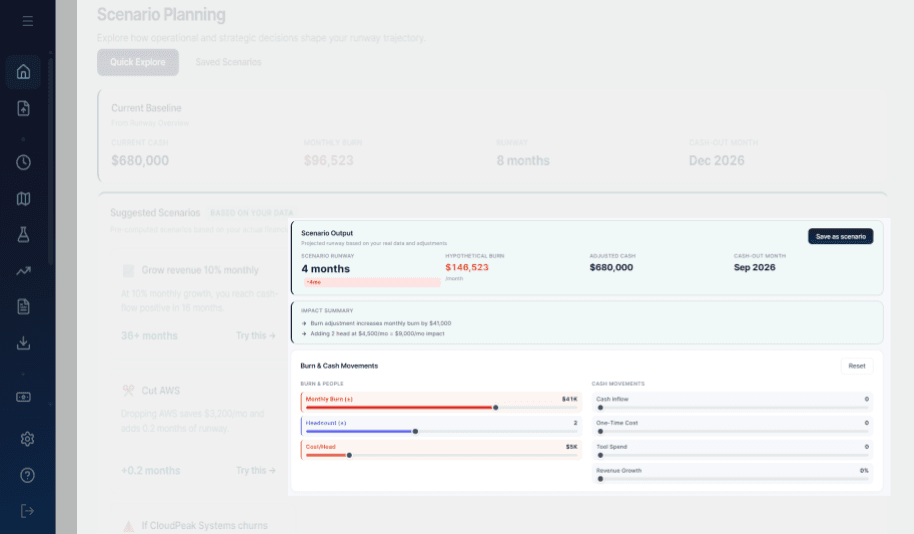
04 / See what changed
Bring the next discussion back to the plan.
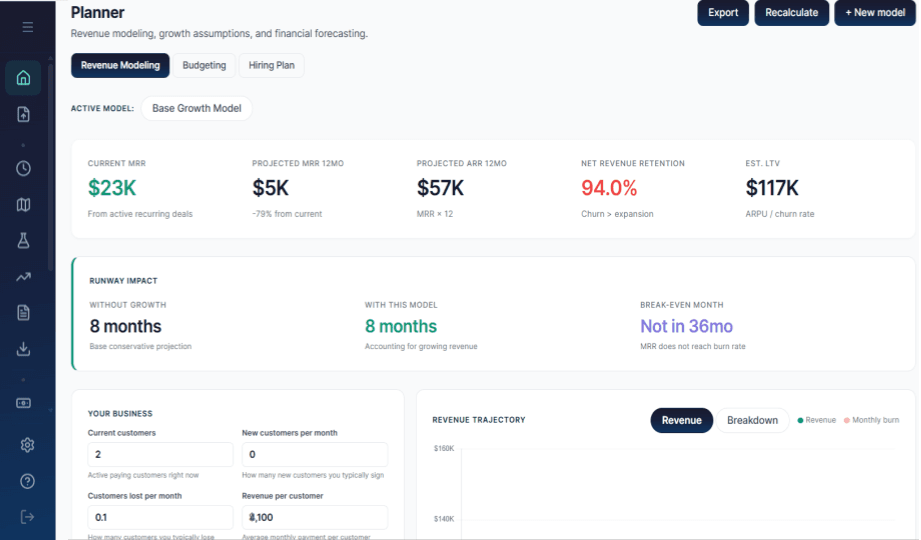
Compare the working plan with what actually happened. If revenue, spending, or timing moved, both founders can see which assumption needs another look before changing the plan or the operation.
05 / Keep the trail clear
Make the discussion understandable later.
Keep the starting point, assumption, scenario, and reviewed decision in a sequence that finance or an advisor can follow. Sharing context does not hand the judgment to the software.
Current reality
Review recorded cash, revenue, costs, and obligations.
Decision in discussion
Name the hire, spend, or timing question.
Scenario
Change the relevant assumption without rewriting actuals.
Consequence
Compare what could change in cash, burn, and runway.
Founder decision
Discuss the tradeoff and choose the next move together.
One current picture. One decision to discuss.
Make the next decision from the same numbers.
Start from recorded reality, test the assumption in question, and make the call together with the consequence in view.