
Seed Funding
Seed funding is an early financing stage used to help a company develop its product, team, market, and operating evidence before a later financing or self-sustaining milestone.
The stage does not have one fixed dollar range, investor type, instrument, or runway target. A seed round can use priced equity, SAFEs, convertible notes, or another structure under the applicable terms.
Seed funding increases financing cash when proceeds are received, but it is not customer revenue. The planning question is what the capital needs to make possible and which commitments the business can support before the next decision point.
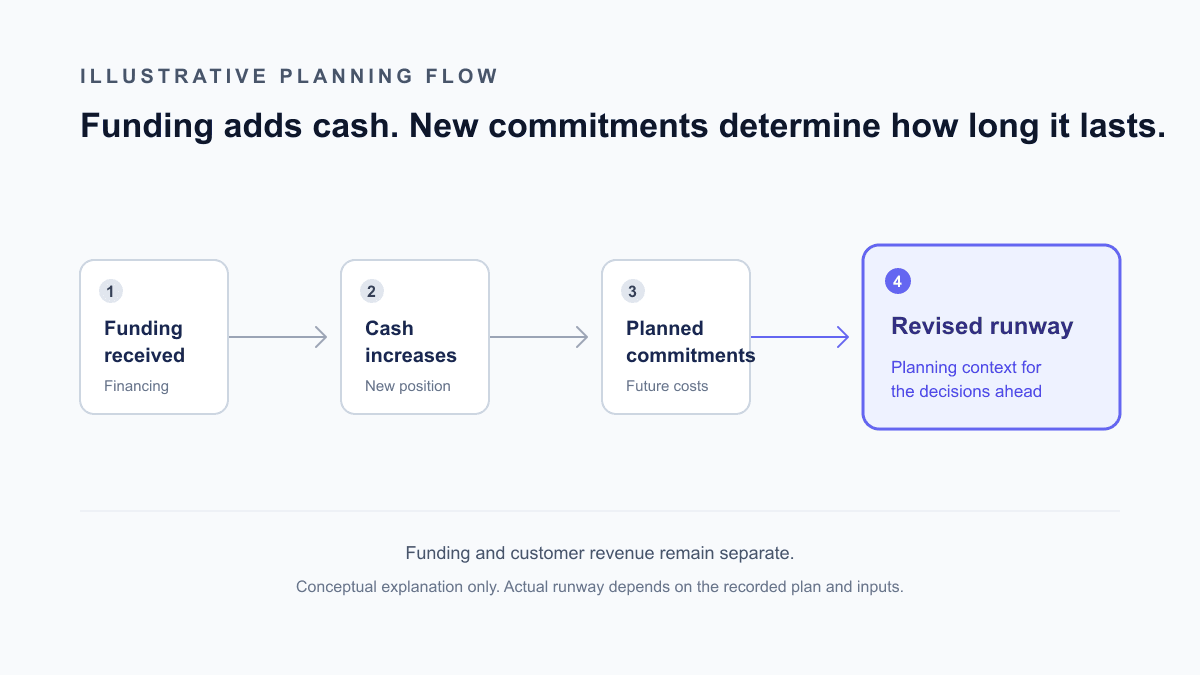
Funding adds cash. New commitments determine how long it lasts.
What is Seed Funding?
Seed funding is an early stage of external financing used to help a company build, validate, hire, sell, or reach another business milestone. The label describes a stage in the company’s financing journey rather than a universal amount, investor profile, or operating benchmark.
A seed round can be structured as priced equity, a SAFE, a convertible note, or another instrument. Each structure can create different ownership, dilution, conversion, interest, maturity, governance, and legal effects. Professional legal and financial advice is required for the actual terms.
Funding proceeds are financing cash, not customer revenue. They can extend runway when received, but new payroll, software, marketing, professional fees, and other commitments determine how long that additional cash supports the business.
What can seed funding be used for?
Companies may use seed capital for product work, key hires, customer development, compliance, market entry, operations, or another stage-appropriate objective. The useful plan connects each material commitment to the evidence or milestone it is intended to support.
Seed funding versus revenue
Investment increases cash when the proceeds arrive. It does not represent revenue earned from customers. Keep financing inflow, recognized revenue, expected receipts, and operating performance separate in reporting and runway analysis.
Which financing structures can appear?
Priced equity
Shares are issued at an agreed price and valuation under the round documents.
SAFE or convertible note
Conversion mechanics, caps, discounts, interest, maturity, and other terms depend on the instrument.
Other structures
Jurisdiction and agreement can produce different rights, obligations, and accounting treatment.
Why it matters
A seed round can create operating room, but the amount raised does not establish how long the company can operate or whether the round was sufficient. Starting cash, burn, hiring, collections, one-time costs, financing fees, and new commitments shape the runway created by the proceeds.
The next planning step is to define what the capital should support, which assumptions remain uncertain, and when leadership will review the path again.
What goes into it
- Proceeds actually received and closing date
- Financing fees and relevant instrument obligations
- Current cash path, payroll, commitments, and planned uses
- Milestones and review points without universal runway targets
Illustrative post-close review
A company closes a seed round and records the proceeds as financing cash. The founders are considering two hires, a larger marketing program, and a new annual software contract. They compare those commitments with the current runway and keep an unclosed follow-on financing idea in a separate Scenario rather than treating it as cash.
How RunwayCal helps
RunwayCal can keep funding separate from customer revenue, show how recorded proceeds affect the current cash path, and let founders test hiring or spending alternatives in Scenarios before committing.
RunwayCal does not recommend financing instruments, negotiate terms, calculate legal ownership, maintain the cap table, or guarantee that a round will close.
Common mistakes
- 1Treating seed funding as customer revenue.
- 2Using one dollar range, investor type, instrument, or runway target as a universal definition.
- 3Hiring from the bank balance without modeling recurring commitments and timing.
- 4Ignoring the ownership, conversion, interest, maturity, and legal terms of the instrument.
- 5Assuming RunwayCal recommends a financing structure or provides legal advice.
Get the Financial Clarity Newsletter
Practical tips on cash flow, runway, and financial decisions for founders, business owners, CFOs, investors, and board members. Free, weekly, no spam.
Plan what the funding needs to make possible.
See how new hires, costs, and timing choices change the runway created by recorded financing cash.
Explore Runway Overview